The running mill: how Cham-gonu is really won
Cham-gonu is the deepest game in Korea's Gonu family — two players, 12 pieces each, a 24-point board of three nested squares. You can lead the whole first half and still lose, and almost always for the same reason: the other player built a running mill. This guide walks through a real game where exactly that happens, then shows how to build one yourself and how to stop one.
The board in 30 seconds
The 24 points sit on three nested squares. Lines join the middle of each side across all three squares, and — unlike the Western Morris games — the corners are joined by diagonals too. That makes 20 lines where three of your pieces form a mill. Not every point is equal:
| Point | Neighbours | Lines through it |
|---|---|---|
| Middle square, corner | 4 | 3 |
| Middle square, side centre | 4 | 2 |
| Outer / inner square, corner | 3 | 3 |
| Outer / inner square, side centre | 3 | 2 |
The four middle-square corners are the best points on the board: the most room to move and the most mills to join. The opening move itself is restricted — it has to go on one of the four outer corners.
Watch it happen: a real game
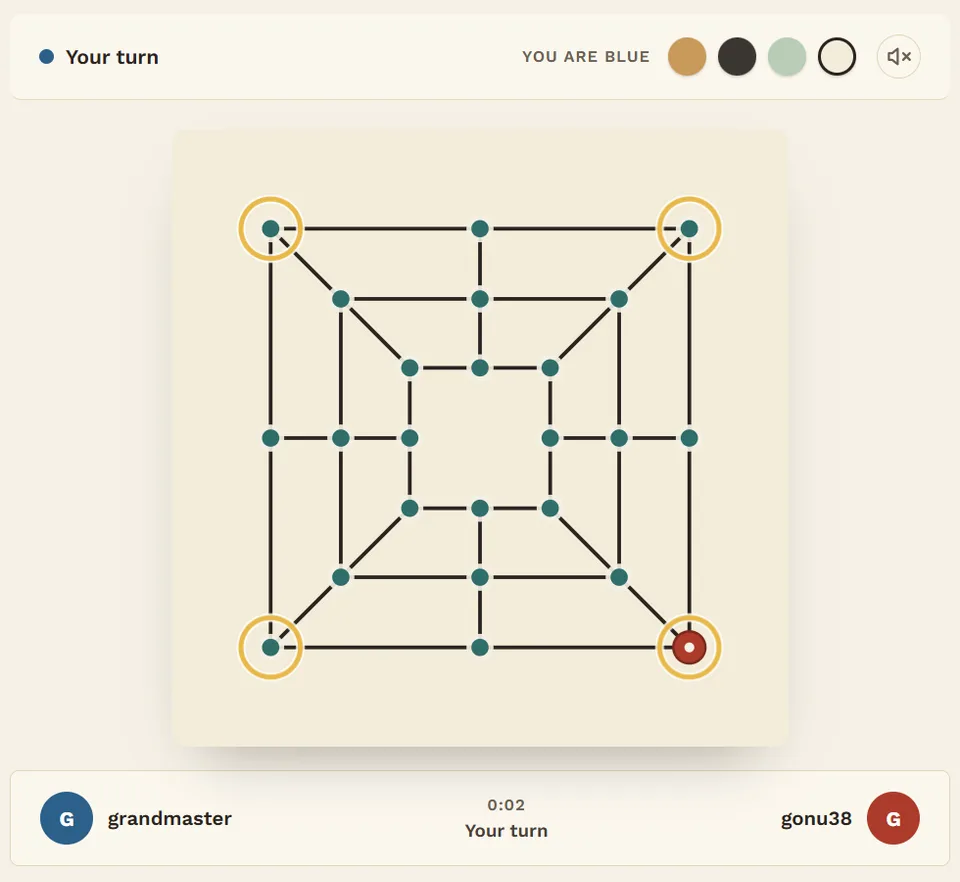
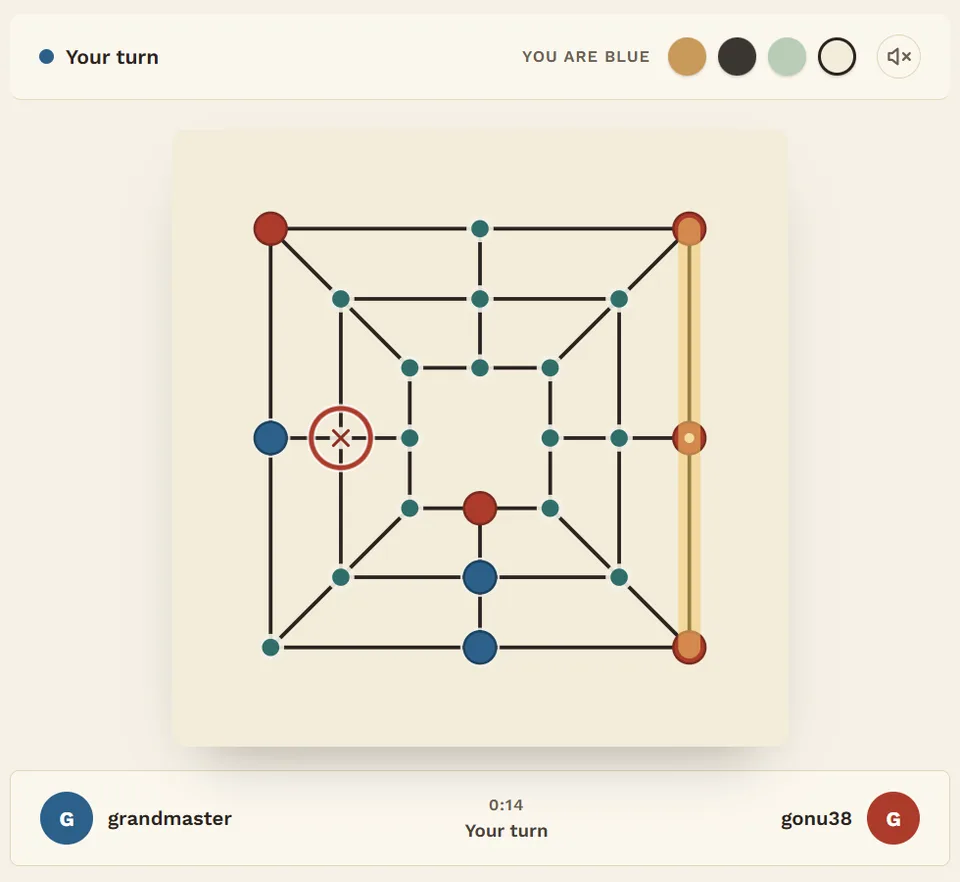
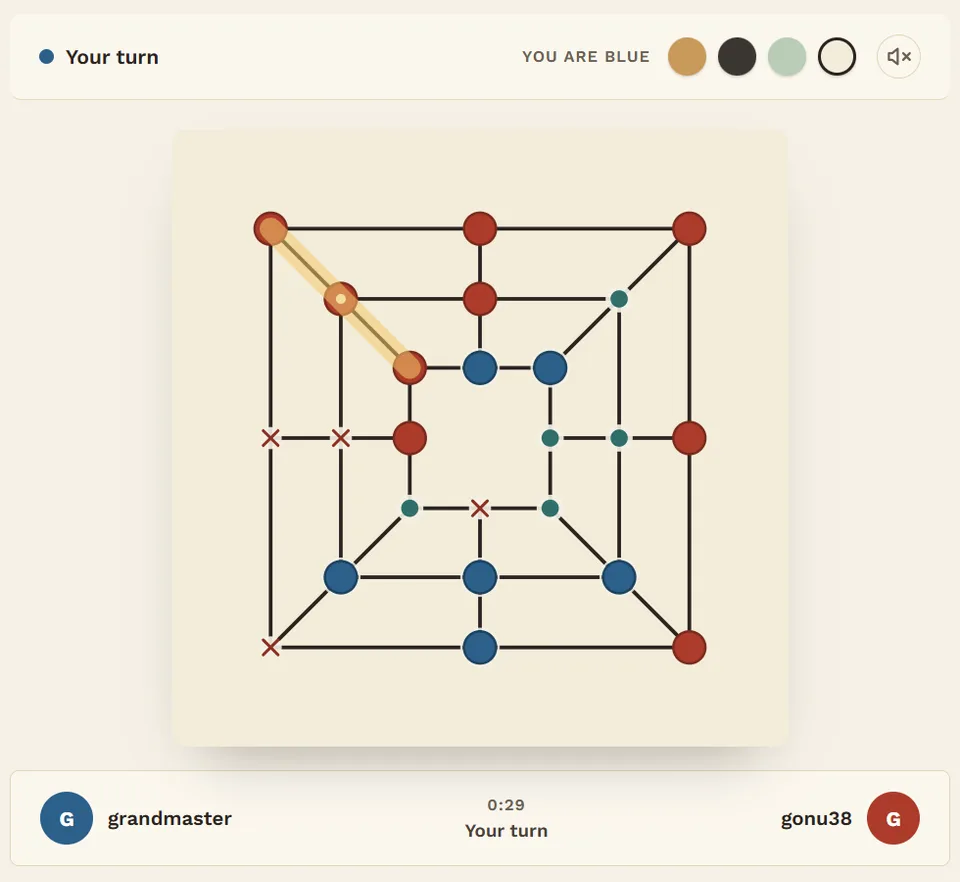
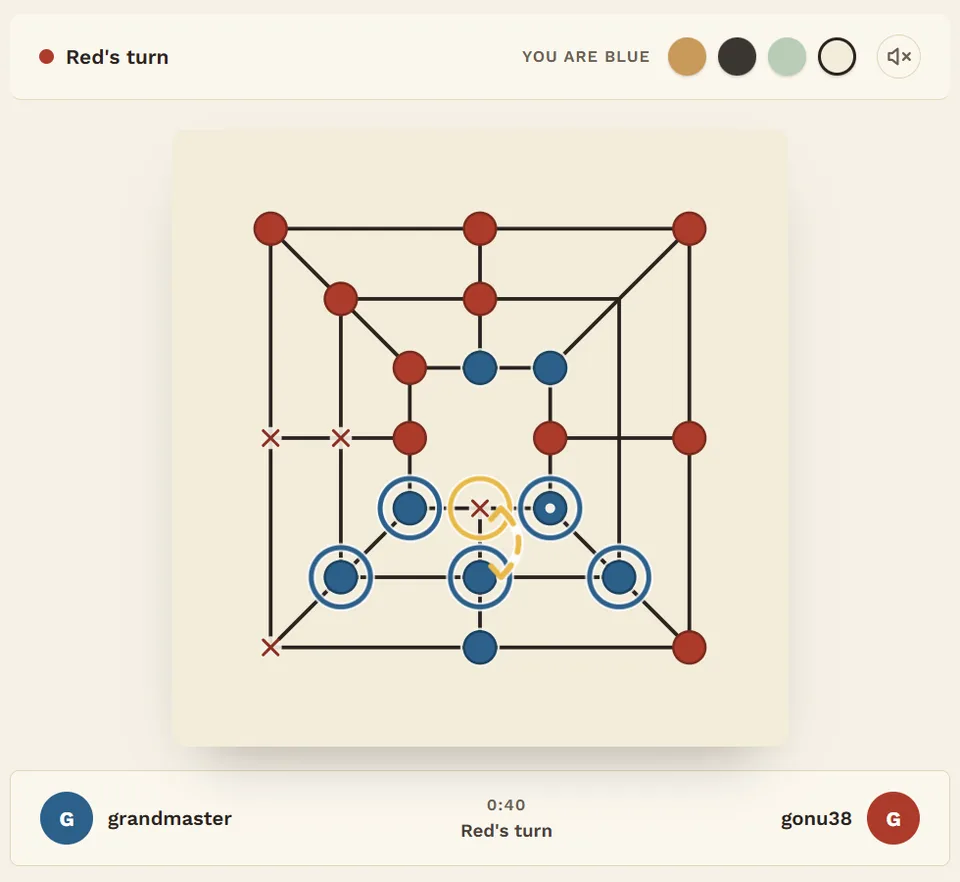
Red moves first. Keep an eye on Blue's bottom side — it looks harmless for most of the first half.
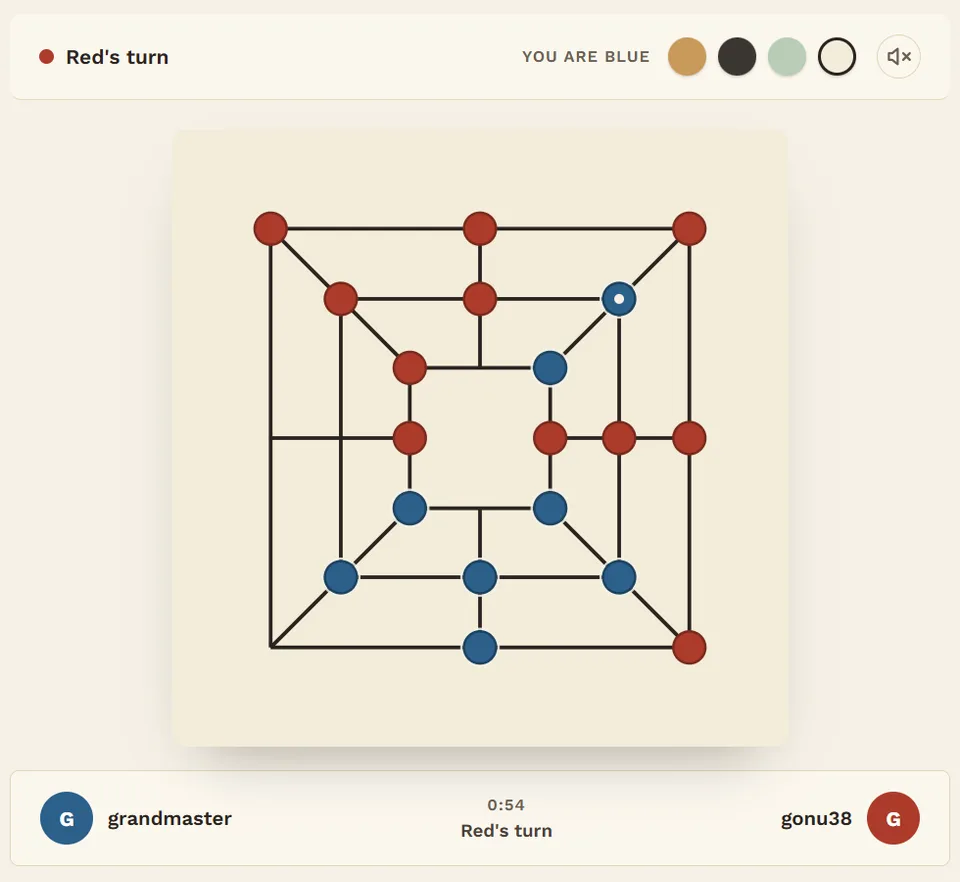
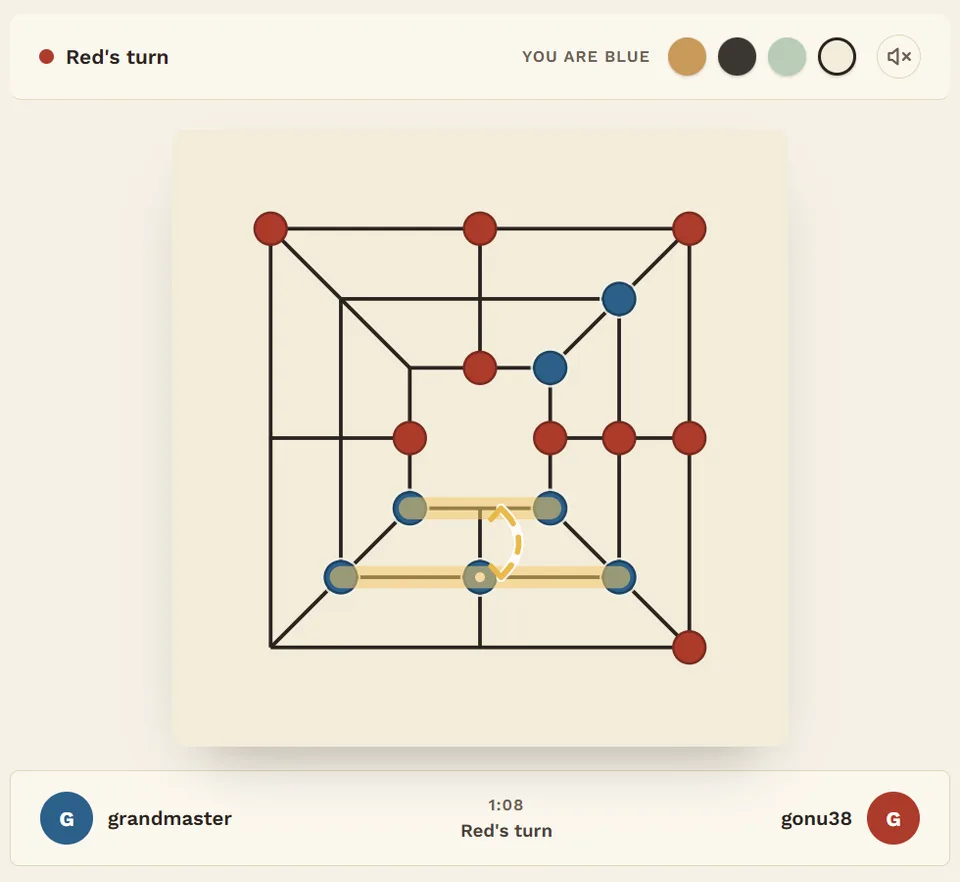
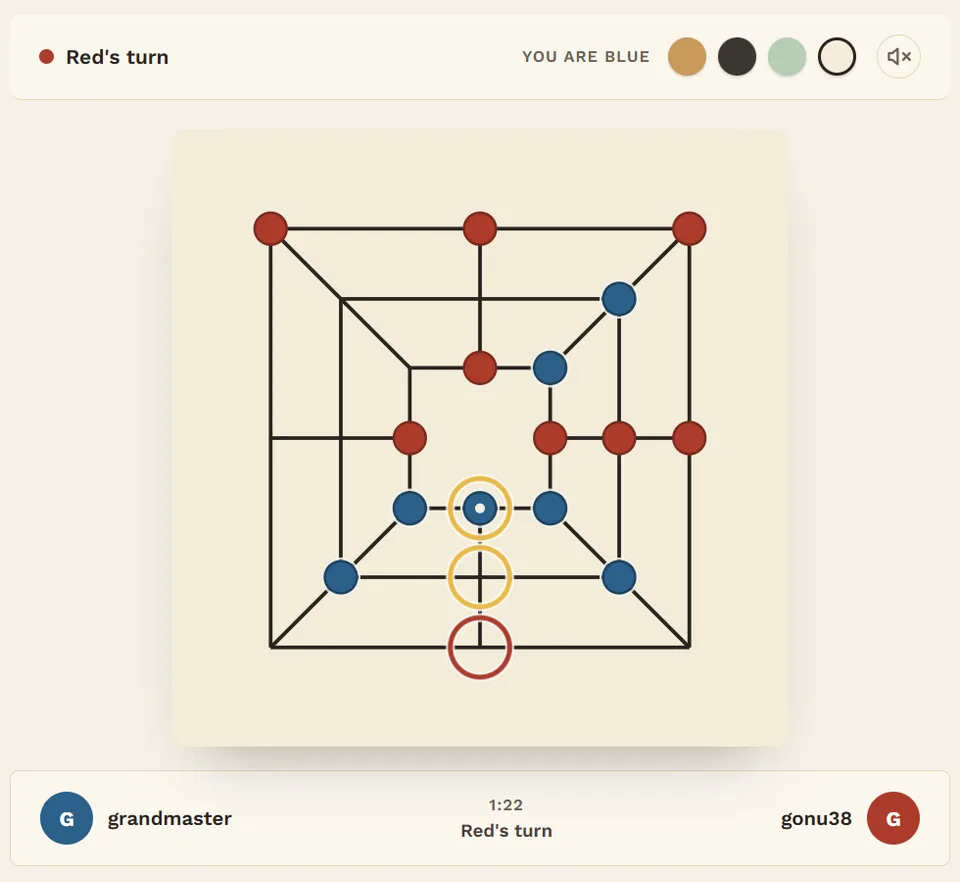
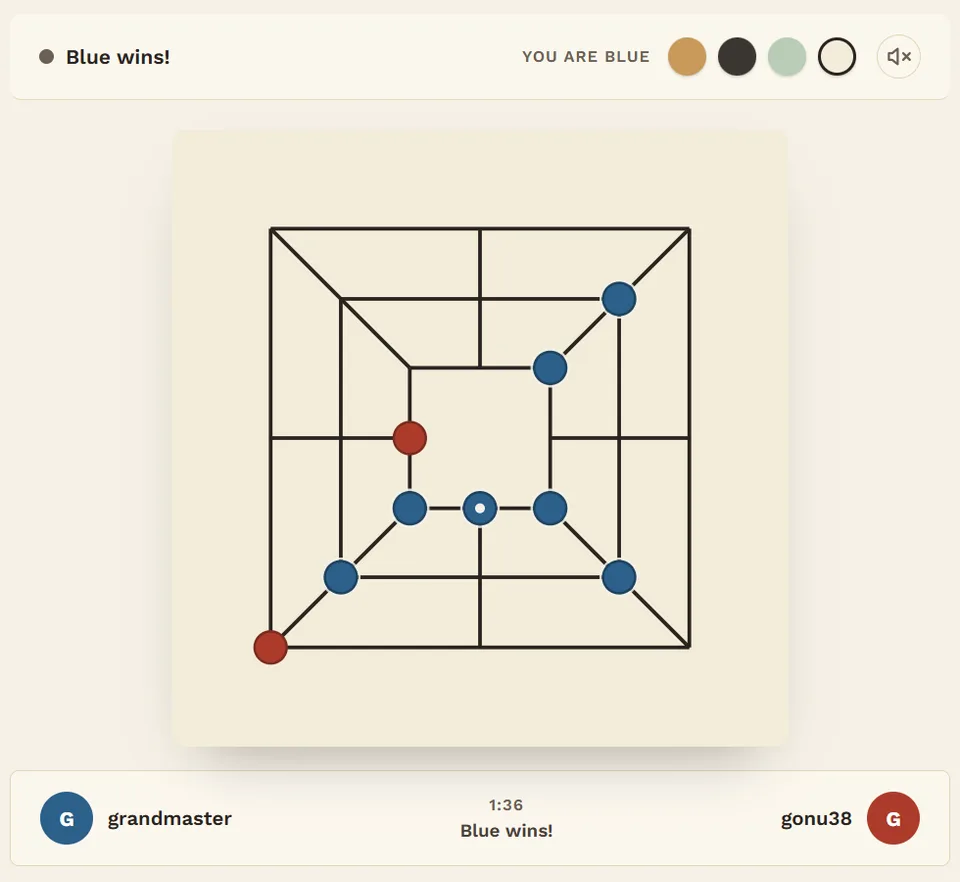
How to build a running mill
- Two parallel sides and one bridge. Take two sides that are joined by a straight spoke — for example the middle and inner bottom sides. Hold both corners of each side, and keep one piece on the bridge.
- Make the gap unreachable. The point your shuttle leaves must not border an enemy piece, or they step in and jam it. A side centre on the outer or inner square is ideal: its only neighbours are your two corners and the bridge.
- Build it while placing. Once the second half starts, nothing new can be placed. Spend first-half moves on the frame even if it means letting your opponent win a few mills — Blue did exactly that.
- Captures can open the gap for you. A point you empty by capturing during placement can't be filled again until moving starts — a ready-made hole for your bridge.
How to stop one
- Take a frame point early. A running mill needs five points. Occupy any one of them during placement and the whole thing collapses.
- Block the gap — before the mill closes. Stepping next to the gap only works if your piece survives; as the game above shows, the running mill captures the blocker first.
- Counter-attack the open side. Whenever the shuttle leaves a mill, the two pieces it left behind are no longer protected. Close a mill of your own and capture one of them.
- Count mobility. If they have no legal move on their turn, you win outright — a crowded board makes blockades common.
Try it yourself
The Master AI builds and defends running mills. See if you can get yours working first.